SORA RENTAL NOTE · 09
When the owner changes,
what happens to your lease and deposit?
If your lease is enforceable against third parties, an ordinary sale of the home does not make it disappear. The new owner succeeds to the landlord’s position, and responsibility for returning the deposit generally transfers with it.
Understand it through a comic
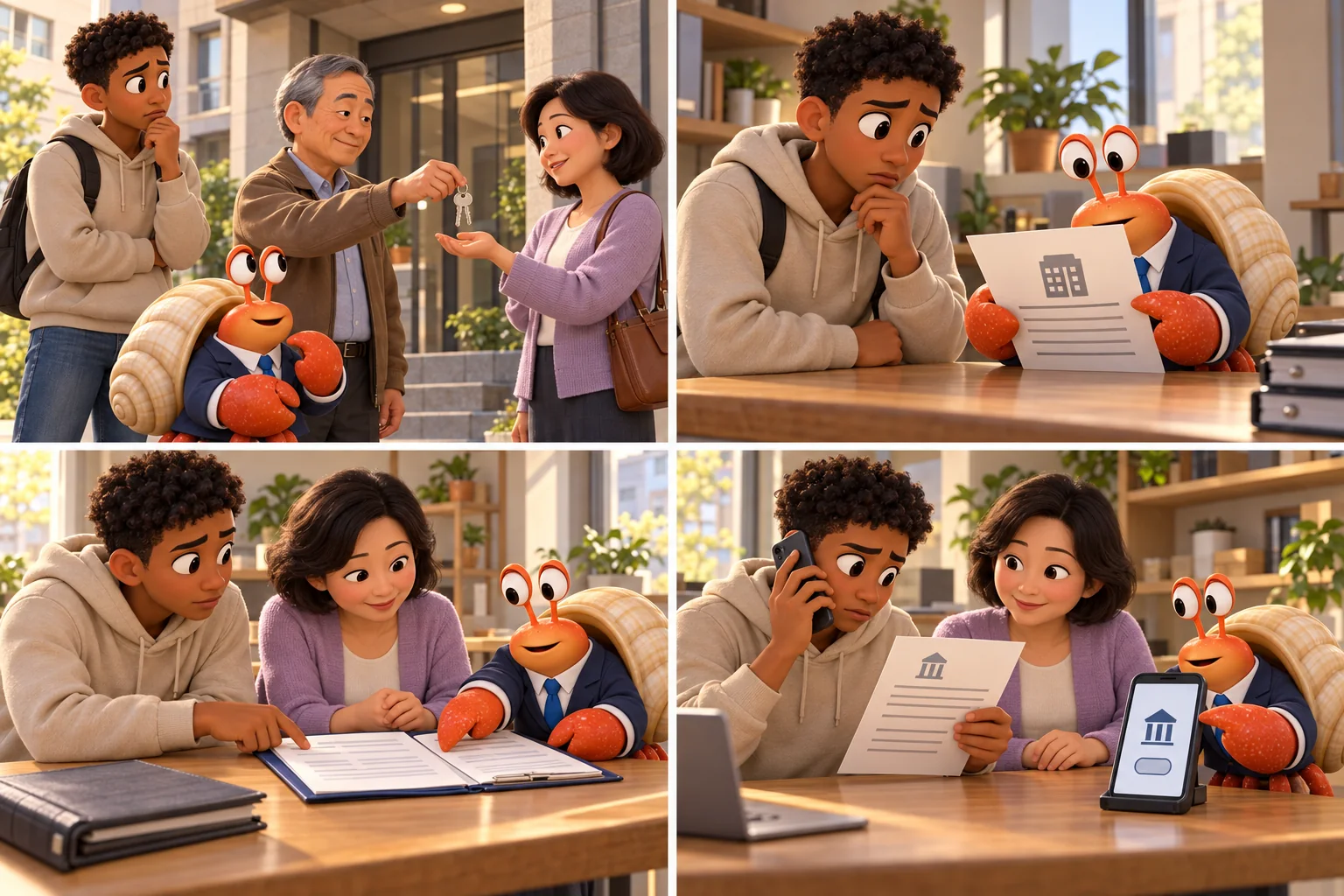
A sale does not, by itself, bring your lease to an immediate end.
Review the property register, possession and address registration to check the conditions for the landlord’s position to transfer.
For a lease protected against third parties, the new owner generally takes over the landlord’s position and deposit repayment obligation.
Do not transfer money based only on a message. Verify the owner, authority to receive payment and the account-change instructions.
These illustrated examples explain the situation. Read the article below for the requirements and exceptions.
THE SHORT ANSWER
Start with these three points.
- 01
A lease protected against third parties carries over to the new owner.
If the owner changes after the tenant has gained protection against third parties through possession of the home and resident registration, the buyer succeeds to the landlord’s position under Article 3(4) of the Housing Lease Protection Act.
- 02
The existing term, deposit and rent do not automatically become new terms.
A sale alone does not end the lease or force you to enter a new one. Because the existing landlord–tenant relationship carries over, the ownership change itself does not automatically alter the agreed terms.
- 03
The obligation to return the deposit generally transfers to the new landlord too.
The Supreme Court’s general position is that, when the landlord’s position transfers, the deposit repayment obligation also passes to the new owner and the previous landlord’s obligation is extinguished. There is, however, a case concerning a transfer after the lease had ended while the deposit remained unpaid: if the tenant objects to the succession within a reasonable time after learning of the transfer, the previous landlord’s repayment obligation may remain (Supreme Court case 2001Da64615). The timing and content of the objection, as well as subsequent conduct, matter. If you wish to object, obtain individual legal advice promptly rather than assume this narrow exception applies to every sale.
The key assumption: This explanation focuses on an ordinary sale where the tenant has taken possession, maintained resident registration and obtained protection against third parties. A court auction or public sale, and the effect of earlier-ranking rights, require separate assessment of distribution priorities and whether rights survive.
THE LEGAL BRIDGE
Protection against third parties matters when enforcing your lease against a new landlord.
- Possession of the home
- Registered address
- Protection requirements
| What to check | What it means | Practical evidence |
|---|---|---|
| Possession of the home | Whether you have actually received and continue to occupy the room | Key handover, move-in date and current occupancy |
| Resident registration | Whether you have completed the move-in report and kept the address registered | Whether the registered address matches the actual home |
| When protection begins | The lease can be enforced against third parties from the day after both conditions are met | Compare this with the timing of the ownership transfer registration |
| The new owner | Whether the buyer has acquired registered ownership | Check the ownership section of a current property registration certificate |
Do not change the rent payment account just because a message says the landlord has changed.
- Confirm the current owner using a fresh property registration certificate.
- Check that the information from the old and new landlords is consistent.
- Verify how the new account holder relates to the new owner or to a person legally authorized to receive payment.
- Keep the account-change instructions and transfer records.
WHAT STAYS, WHAT TO CHECK
Separate the terms that continue from the details you need to verify.
- Existing lease
- New owner
- Receiving account
The existing rental relationship
Where the lease is protected against third parties, the existing relationship—including the term, deposit and rent—generally carries over to the new landlord.
Who must repay it
Check the latest ownership record and the chain of succession to identify the landlord at the end of the lease. Coordinate repayment and handover with that landlord.
Owner, bank account and contact details
Confirm the ownership transfer date, the new landlord’s identity and contact details, and the rent payment account in writing.
A rent increase is a separate issue. Rent does not automatically rise simply because the owner changes. Any rent adjustment requires a separate look at the grounds, caps and timing restrictions under Article 7 of the Housing Lease Protection Act, as well as agreement between the parties or an appropriate dispute-resolution process.
PRACTICAL CHECKLIST
If you are told the owner has changed, work through these checks.
- 01Property records
- 02Confirm with the party
- 03Receipt and breakdown
- Ownership
Check the transfer in a current property registration certificate
Obtain a fresh certificate and check its ownership section for the owner and transfer date. Do not rely only on the copy you saw when you signed the lease.
- Keep protection
Check continued possession and your registered address
Confirm that you still possess the home and that the address remains registered. Changing your registered address away from the property without checking the consequences may put protection against third parties at risk.
- Contact details
Keep written evidence of the new landlord’s identity and notice
Confirm the name, contact details, postal address and ownership transfer. Store the notice or messages with your lease.
- Rent payments
Verify the account holder and authority to receive payment
Do not respond to an urgent third-party request for a transfer before verification. Keep both the change instructions and payment records.
- End of lease
Coordinate the deposit refund with returning the home and keys
Agree in writing with the current landlord on the refund amount, utility settlement and key-handover time. If the lease has ended and you must move before receiving your deposit, consider a leasehold registration order. Applying is not enough: to preserve existing protection against third parties and preferential repayment rights, confirm that the leasehold registration has actually been completed in the property register before you give up possession or the registered address.
FAQ
Frequently asked questions about a change of owner
Do I have to sign a new lease with the new owner?
A change of owner alone does not erase the existing lease. The landlord’s position may transfer by law even without a new document. You can record changed details such as the parties, contact information and payment account in a confirmation document. Read it carefully so that an administrative update is not treated as a new lease that changes the term or amounts without your agreement.
The old owner received my deposit. Does the new owner return it?
In a lease protected against third parties, the obligation to repay the deposit generally transfers when the new owner succeeds to the landlord’s position. Check current ownership, the requirements for protection and when the lease ends.
Must I leave immediately if the landlord says the property has been sold?
If your lease is protected against third parties, a sale alone does not end it immediately. Other circumstances—such as the lease expiring, grounds for refusing renewal, or a court auction or public sale—need separate assessment.
What if the new landlord asks for higher rent?
The existing rent does not automatically change with ownership. Check the legal grounds for an increase and the caps and timing limits in Article 7. If you cannot agree, consider housing lease dispute mediation or legal advice.
OFFICIAL SOURCES
Official sources checked on 3 October 2026
- Korean Law Information Center · Housing Lease Protection Act Article 3: protection against third parties and succession to the landlord’s position; Article 7: requests to adjust rent or deposit↗
- Ministry of Government Legislation · Easy Law Succession to the landlord’s position and the requirements for protection against third parties↗
- Korean Law Information Center · Supreme Court decisions Transfer of the landlord’s position and the obligation to repay the rental deposit↗
- Supreme Court, 4 September 2002, case 2001Da64615 Objection to succession and the previous landlord’s deposit repayment obligation↗
This article provides general information based on legislation and official explanations checked on 3 October 2026; it is not legal advice. The result may depend on when protection against third parties began, how ownership changed, earlier-ranking rights, a court auction or public sale, special lease clauses and a deposit repayment dispute. For your own case, take the property registration certificate and lease to a legal professional or the Housing Lease Dispute Mediation Committee for individual advice.