SORA RENTAL NOTE · 20
Does Korean tenant protection cover a one-semester rental?
A short lease is not automatically a temporary-use exception. Learn what to check when renting for a semester or exchange program in Korea.
Content checked · 3 October 2026
The key points
- A short term or exchange-student status does not automatically exclude a lease from the Act.
- Article 11 excludes leases clearly intended for temporary use.
- The actual purpose and circumstances matter, not just the contract’s heading.
01 — 04
Start with the comic
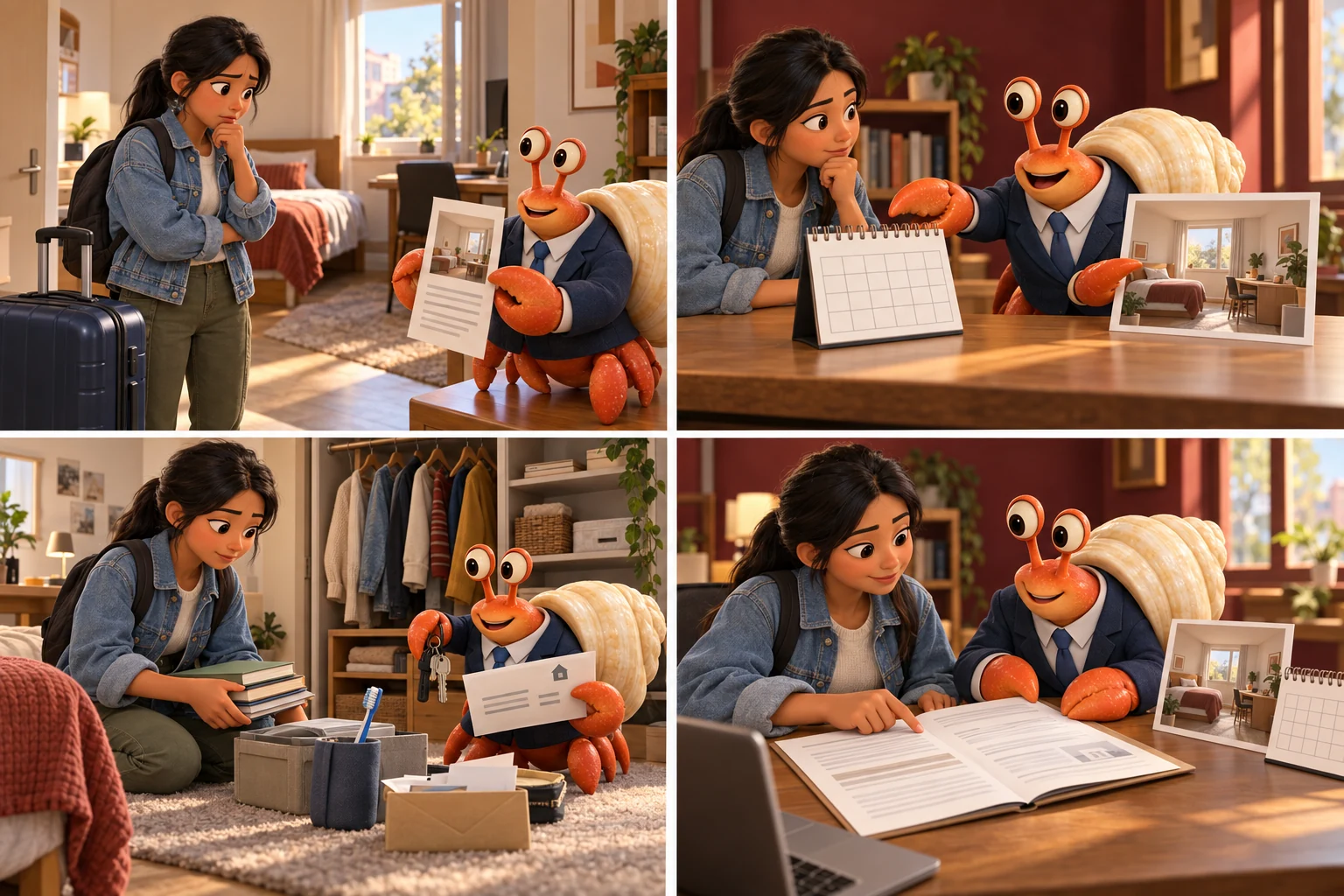
Do I lose tenant protection if I stay for one semester?
A short term alone doesn’t decide it. We need to check the actual arrangement.
This will be my home, but the contract says ‘temporary use.’
That label isn’t conclusive. Let’s check the purpose and terms.
Short-term is not automatically temporary use
- Duration
- Actual purpose
- Legal requirements
Korea’s Housing Lease Protection Act generally covers leases of all or part of a residential building. Article 11 excludes a lease clearly intended for temporary use. The arrangement’s actual nature matters, not simply its length.
A six-month term, exchange-student label or furnished room does not alone establish that exception. Equally, not every short stay necessarily qualifies for protection. A student’s nationality does not automatically decide this issue.
Compare the label with what you are renting
- Contract terms
- Actual purpose
- Messages exchanged
Words such as ‘temporary accommodation’ are not conclusive. Review why the room is being rented, the explanations and agreement at signing, the term and payment arrangements, and how it will actually be used.
Explain if you need an everyday home during your studies. Ask why the contract describes it as temporary use. Save the listing, messages, contract and payment records; these help establish what was agreed. Clarify unfamiliar wording before signing.
Check each protection separately
- Protection requirements
- Lease dates
- Refund conditions
Even where the Act applies, every deposit-related protection does not arise automatically; separate requirements apply. Use the relevant guides for lease length and address-registration procedures. Do not assume a short stay makes all formalities unnecessary.
A genuine Article 11 exception does not erase all contractual rights or duties. The Civil Act and agreed terms still matter. Record move-in and move-out dates, total charges, cancellation and termination terms, deposit-return timing, and included facilities or services.
What to check
- Explain your rental purpose and intended living arrangements.
- Ask why any temporary-use clause is included.
- Record dates, deposit return and cancellation or termination terms.
- Keep records and separately check required protection procedures.
Common questions
Is every stay of three months or less excluded?
No. Article 11 provides no universal month-count cutoff. Review the actual purpose and circumstances.
Can signing a waiver alone exclude the Act?
A label does not change the arrangement’s actual nature. Where the Act applies, an agreement cannot simply override its mandatory protections.
Official sources
These laws and public-agency materials concern renting in Korea. Source documents are mainly in Korean.