KOREA UNIVERSITY · EVERYDAY LIVING
How to Dispose of Household Waste Near Korea University
Start with your exact home address. Anam-dong and Jongam-dong are in Seongbuk-gu; Jegi-dong is in Dongdaemun-gu. Nearby streets can follow different rules, so do not copy a neighbour’s schedule without checking.
Last reviewed:
Sora-ge’s illustrated waste-disposal guide
A quick overview in eight panels. Check the detailed instructions below and the rules for your exact address.
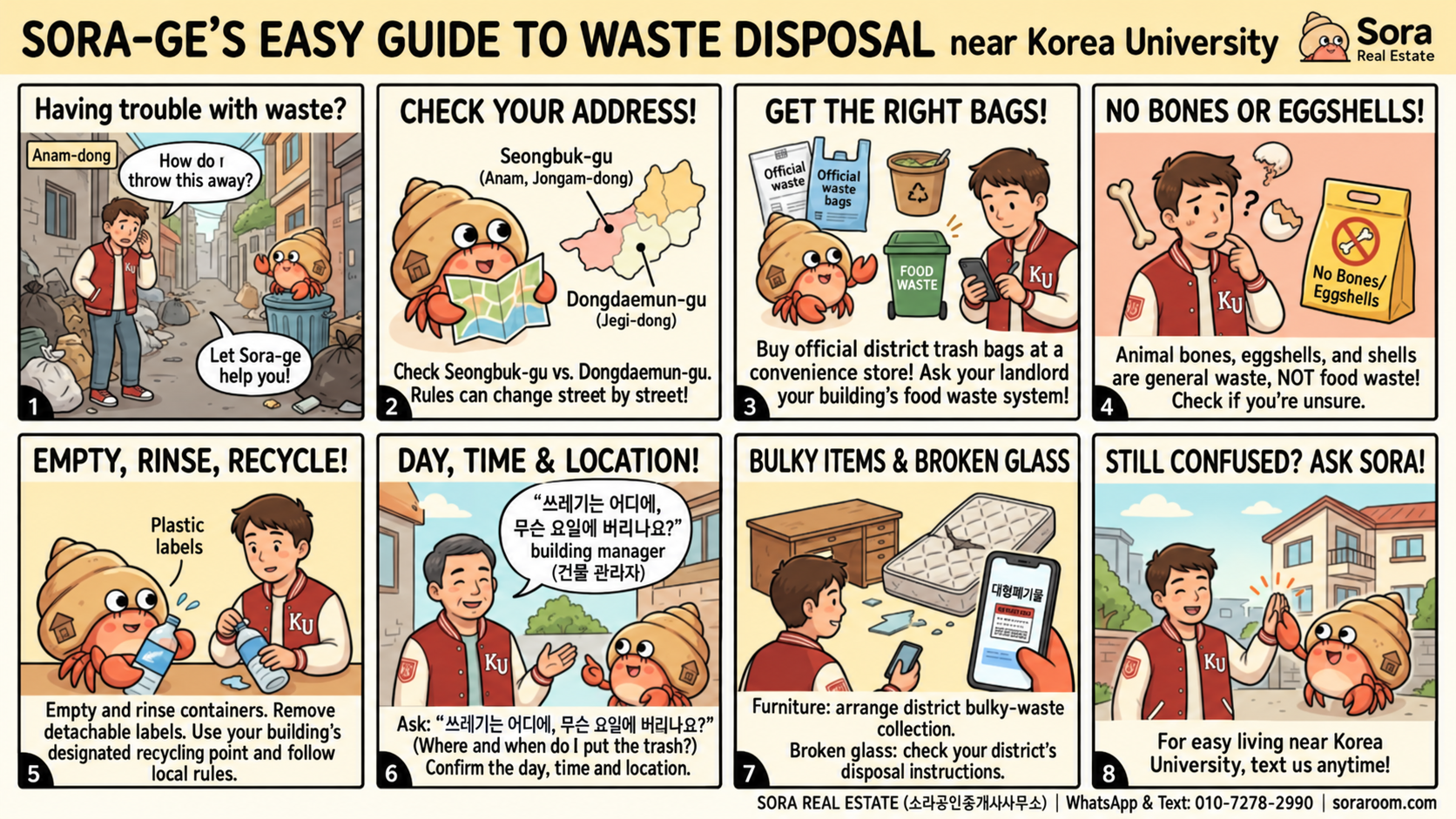
Read the comic as text
Start with your address
Check the rules for your own address before putting rubbish outside.
Check your district
Anam and Jongam are in Seongbuk-gu; Jegi is in Dongdaemun-gu. Check your district’s instructions.
Use the correct bags
Use the official bags for your address. Ask how your building collects food waste.
Keep bones and eggshells out of food waste
Animal bones, eggshells and shellfish shells are general waste, not food waste. Check uncertain items with your district.
Empty, rinse and separate
Empty and rinse containers. Remove detachable labels. Use your building’s designated recycling point and follow local rules.
Confirm the day, time and location
Ask the landlord or building manager to show you the disposal point. Confirm the day and time for your address.
Furniture and broken glass need separate instructions
Furniture: arrange district bulky-waste collection. Broken glass: check your district’s disposal instructions.
Ask when you are unsure
For an unclear item, check the district’s instructions. For your building’s disposal arrangements, ask the landlord or manager.
1. Check the bags and your building’s system
- Ask which district’s official general-waste bags your address uses and where to buy them. Keep a photo of the correct bag on your phone.
- Ask how your building collects food waste. It may use designated food-waste bags or a separate container; ordinary shopping bags are not a substitute.
2. Separate food waste and recyclables
- Seongbuk-gu lists animal bones and eggshells as general waste, not food waste. Check uncertain items against the district’s guidance.
- Empty containers and separate recyclable materials using the district’s instructions. Do not put leftover food or mixed rubbish into the recycling collection.
3. Confirm the day, time and location
- Check the official schedule for your neighbourhood and ask the landlord or manager to show you the building’s designated disposal point.
- Holiday notices can change collection arrangements. Anam and Jongam also have different schedules, including separate rules for some recyclables. Recheck before putting bags outside.
4. Arrange bulky or unusual waste separately
- A desk, mattress or other bulky item needs the district’s disposal procedure. Arrange disposal before leaving it outside.
- For broken glass, batteries, electronics or an item you cannot identify, check the district’s guidance first. A photo of the item makes your question clearer.
Useful Korean phrases
이 주소에서는 어떤 종량제봉투를 써야 하나요?
Which official rubbish bags should I use at this address?
쓰레기는 어디에, 무슨 요일에 버리나요?
Where should I put the rubbish, and on which days?
Official sources
Some source pages are in Korean. Local rules and service conditions can change; check the linked source before acting.